winter is the sexiest time of the year
We’re layering our clothes for winter all wrong. And, of course, who has the time to spend hours researching "how to layer your clothes for winter" between maintaining a full-time job while entering the fourth year of a global pandemic, managing five crushes while married but separately dating the love of your life? (The “love of your life” isn’t necessarily who you’re married to.) Fortunately, it is my full-time job to do the research, and I am currently four crushes short, so I have all the time!
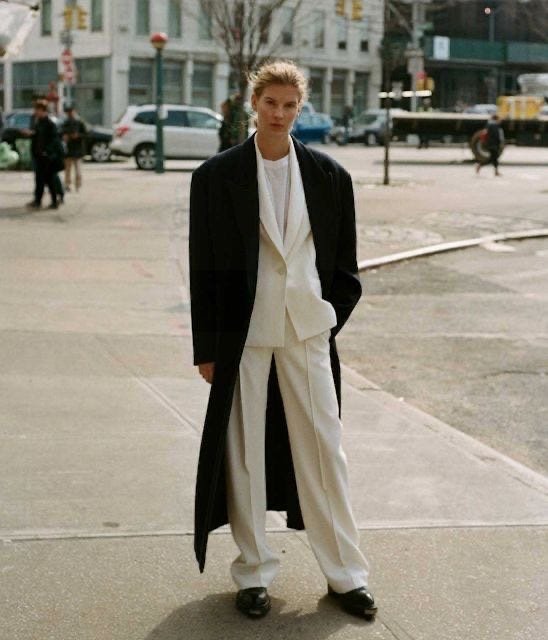
I wish it had occurred to me to write this sooner because winter is a sexy timefor me because I dress better, and layering is sexy. However, I have not always taken effective layering seriously, and my life is sedentary, so I have not prioritized the mechanics of staying warm while out. In my teens and early 20s, I barely wore a coat and stomped around (albeit miserably) in open-toed shoes and mini dresses, then opting for sockless clogs and mules paired with jeans once I grew tired of pretending I enjoyed clubbing. In my late 20s, I appreciated the creativity of layering and mixing colors and textures in cooler months. I will always appreciate a sexy little mini dress, fur coat, strappy heeled sandals, and gloves a la Carrie Bradshaw in SATC, but now, there’s also a balanced appreciation for layering my jeans with cashmere leggings.
Additionally, undressing in the winter to have sex teaches forbearance and delayed gratification. If you're still on the fence, consider this: Winter sex is superior because the sweat you work up adds to the eroticism of the act, as opposed to the repulsive sweatiness of sex in humid July midwestern heat. If you disagree, I can't help you.
After reading a tweet from a well-known fashion stylist about the limitations of winter fashion, it became my responsibility to bust the myth that winterdressing is void of creativity. Instead, I will educate you on how to dress appropriately for the season without sacrificing warmth or style by teaching you the mechanics of layering. I won’t throw you to the wolves by expecting you to find these layers on your own, so I have included some of my favorite winter looks, and I have modified them by swapping items out without sacrificing style. I invite you all to enjoy and cherish the most delightful and sexiest time of the year!
Class is in session…
Outdoor expert and gear reviewer Drew Hansen, who became obsessed with cold weather after experiencing and surviving hypothermia as a teenage hiker, suggests three layers are required to stay warm in the harshest temperatures.
Base Layer
The base layer is the most crucial because it’s the closest to your skin. Its job is to absorb moisture and prevent your sweat from cooling you down; it’s not necessarily meant to insulate. (These two things are not the same.)
Fabric: Since attempting to dress better for winter, I have been wearing my Nu Swim cotton tank as my base layer. Outdoor experts strongly advise against this. The reason is: While cotton is suitable for insulation, it traps heat, which causes you to sweat; it also absorbs water but dries slowly. Naturally, your body heat dries the fabric, forcing you to cool down.
Instead, experts highly recommend synthetic fibers like polyester because they wick moisture from the skin and dry much faster. Soft, non-itchy, merino wool is an excellent natural fiber option with superior moisture-wicking AND insulation capabilities. It is fast drying, so you never feel the presence of moisture on your skin. (Cashmere is a luxurious and functional option, but I wouldn't use it as active wear.)
Smartwool, an American activewear company whose "Intraknit" line has a fabric composition of polyester and merino wool, is the #1 choice of outdoor enthusiasts. There’s also Uniqlo's HeatTech, lauded by millennials as the most efficient base layer. HeatTech is a blend of much cheaper polyester, micro acrylic, and rayon, and while the presence of polyester is promising, Uniqlo has never explained the need for acrylic and rayon. (Rayon is a semi-synthetic with poor moisture-wicking capabilities and is better suited for warmer temperatures.) The company claims that the fabric can “capture the energy of water particles released from the body at the nano level and convert this energy into heat,” have yet to be proven.
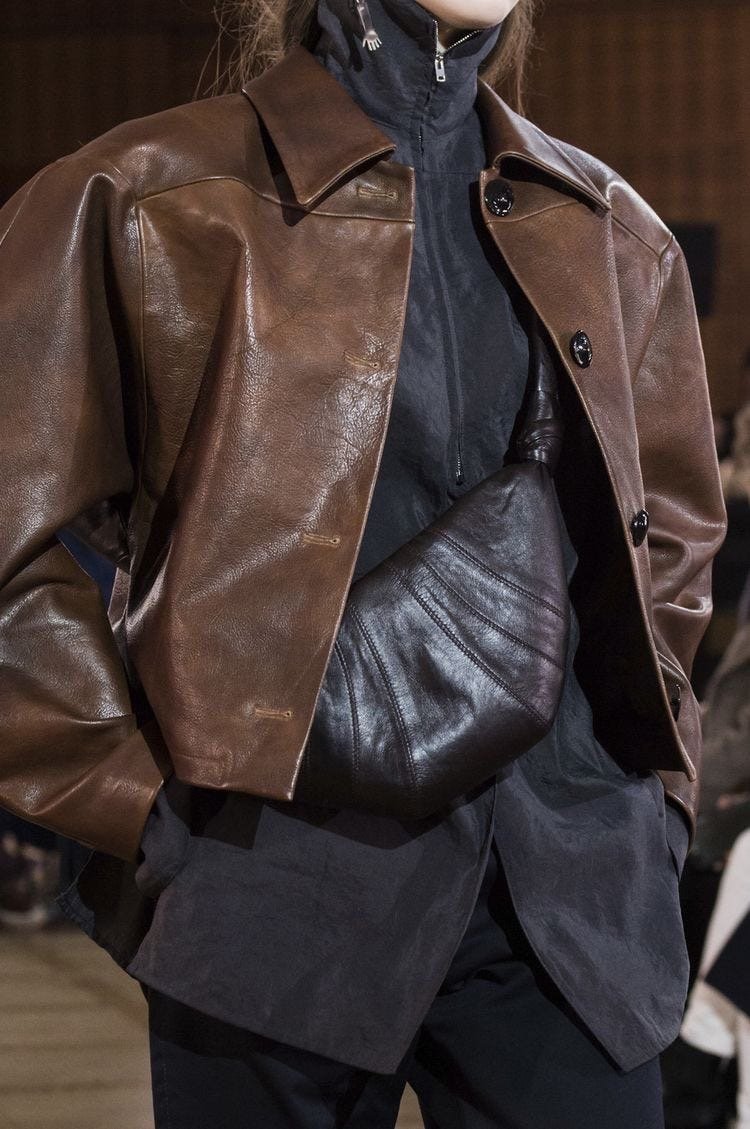
Consider a merino half zip as your base layer before wearing an insulated leather jacket to achieve this look.
Uniqlo markets HeatTech as a standalone piece that reduces or eliminates the need for bulky layers, but experts believe otherwise. They recommend HeatTech for customers trying to stay warm indoors to save on high heating costs.
Fit: A snug but not tight fit is best. You want your base layer touching your body to wick moisture before you feel it.
Important note: While it is our instinct to find the thickest base layer, experts suggest a medium-weight fabric for temps between 20 F-50 F and a thicker weight for temps below 20 F. Use your best judgment if you're someone who heats or cools quickly.
Middle Layer
The job of the middle layer is to retain body heat, and most people emphasize this layer because we (incorrectly!) prioritize insulation over preventing cooling down.
Fabric: Fleece is the most affordable option, but it is useless when wet. Wool and down are great insulation options, but down is also ineffective when wet. A synthetic puffer is often your best option when dealing with wet and cold temperatures without an umbrella. Above 50 F, I can stay warm with a cashmere cardigan and my Uniqlo waterproof nylon windbreaker to keep out the wind and protect me if it rains. Upgrade your middle layer's weight depending on how cold and well your body handles it.
Contrary to popular belief, leather isn't an effective middle layer; it needs an insulation layer, like a synthetic or down lining. Choose a good base layer that can tuck into your bottoms or is longer than your leather jacket to prevent heat from escaping. And if your leather doesn't come with a water-repellent treatment, you can treat it with a protectant.
Outer layer
This is your defensive layer, which protects you against extreme temperatures and harsh weather. (Depending on the temperature, your middle layer can work as your outer layer, as with my Uniqlo windbreaker example above.)
Fabric: The defense layer includes rainwear or anything that protects you from wet conditions. When choosing a defense layer, consider these three critical attributes: precipitation protection (i.e., whether it’s waterproof), windchill protection (same but for wind), and breathability. Nylon, polyester, or a blend of both is best. The good news is that anything waterproof is usually windproof.
While choosing a waterproof defense layer, you also want something breathable because the moisture from your base layer needs a way to escape. The best option to cover these bases is a Patagonia Torrentshell 3L jacket or city coat for those with a walking commute.
More tips
Adapt the advice above to your commute and lifestyle. As someone who spends more time indoors and commutes in a car, I have more flexibility with what I can wear in the winter compared to someone who has a public transit commute or a long distance to walk.
Remember that our feet produce more moisture and lose heat than any other body part, so choose a suitable fabric to wick moisture away. I am guilty of wearing cotton socks in the winter, but the best material for socks is wool or cashmere. (I have gotten into the habit of wearing wool socks when I wear my ballet flats below 50 F; it has made a significant difference.) Nylon socks are also good if you are someone who sweats easily or cannot afford more expensive wool socks. Change your socks multiple times a day if you are active during your commute or doing vigorous exercise.
Remember your legs! I bought wool thermals for my son to wear under his waterproof pants during ice skating class; it was a game-changer! I prefer wearing cashmere leggings as my base layer under my jeans when we go to the ice skating rink to practice or free skate, and I have had a more enjoyable time outdoors this season.
While searching for winter gear, avoid so-called "high tech" fabric made by companies who use flowery language to describe their technology and instead opt for age-old tried and true options like wool and cashmere. Cotton should be reserved for warmer temperatures (though cotton blended with synthetic fibers can be a good base layer for indoors or car commutes). I will again strongly advise everyone against cotton socks during winter for everyone.
I want to emphasize that though synthetic fibers have a bad rep for being environmentally destructive, they are effective at protecting us from harsh and extreme temperatures. Most performance garments, such as underwear, activewear, and rainwear, specifically have synthetic fiber compositions to prevent you from sweating. Keep those functions in mind when looking at your clothes' fabric composition and care labels.
Remember to invest in waterproof shoes for snow and rain. And if you do not want to sacrifice style, opt for a patent leather option that is 100% waterproof. My vintage Prada Sport boots have been a godsend this winter. Remember to clean your patent leather shoes frequently to prevent cracking in the leather after frequent wear. You can always buy leather protectants for your footwear to prevent it from getting soaked! (I wish I had known this sooner!) To make your soles waterproof, have your shoes resoled with a thin rubber sole that adds friction and prevents you from slipping when the ground is wet.
Investing in balaclavas made with wool, nylon, polyester blends, or cashmere will prevent heat from escaping your head, especially if you have shorter hair. I like to wrap my wool scarf around my head and neck to prevent heat escaping. When I do this, I can retain heat throughout my outings.
I habitually carry heat packs in my purse and car during the winter to prepare for an emergency or for warmth when I take my son to ice skating lessons.
Most importantly, follow the care labels for your clothes to prevent any surprises in the wash. I like to hand wash or gently wash my knits — except the ones whose care labels advise against this — at the end of the season with a gentle wool and cashmere soap. Using a suitable detergent, COLD WATER, and drying by rolling excess water out of your knits with a lint-free towel and laying flat to dry will keep your garments from shrinking or stretching out of shape. Hand wringing your knits (of any fiber!) to remove excess water is a no-no!